Electrical Services: Micro-Grid Integration
Pure Energy Solutions for Sub-Saharan Africa

Micro-Grid Integration
Overview
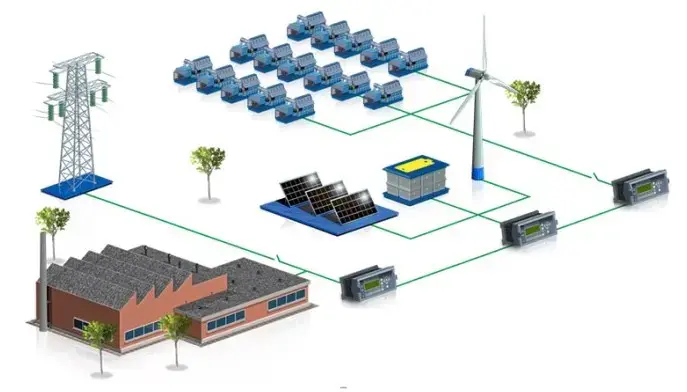
Integrating a Nidec Battery Energy Storage System (BESS) with DEIF controllers and Leroy-Somer alternators creates a hybrid microgrid capable of operating in both grid-connected and islanded (off-grid) modes. The DEIF controllers act as the central brain, managing power flow and orchestrating the different components to ensure a stable, reliable, and efficient energy supply.
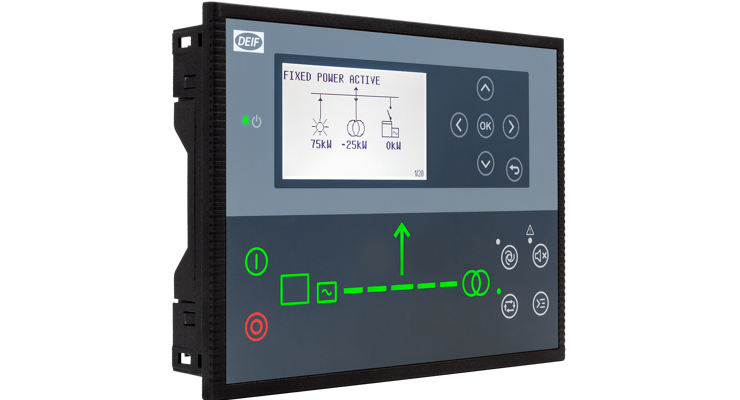
DEIF Microgrid/Hybrid Controller: This is the central energy management system (EMS) for the microgrid.
- Orchestration: The controller manages all connected power sources, including the BESS, the alternator, and the main grid, switching between them based on programmable strategies.
- Prioritization: The controller can be configured to prioritize power from the most cost-effective or sustainable source. For example, it can draw power from the BESS first, then use the alternator only when the battery is depleted or when high loads require additional power.
- Synchronization: In a grid-tied setup, the DEIF controller handles the complex synchronization processes necessary to connect the microgrid seamlessly with the main utility grid, meeting all required grid codes.
- Communications: It communicates with the BESS inverter, the alternator's control system, and other components using industry-standard protocols like Modbus.
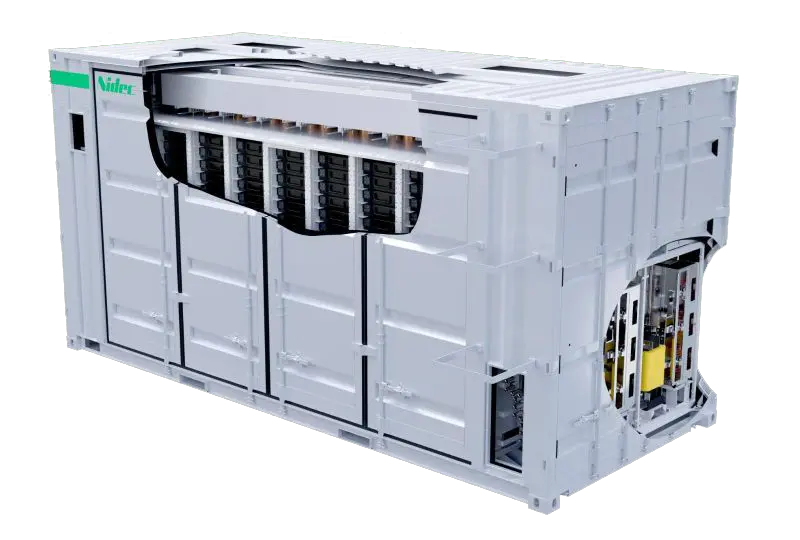
Nidec Battery Energy Storage System (BESS): This provides the fast, responsive power essential for a stable microgrid.
- Grid stabilization: The BESS rapidly absorbs excess power (e.g., from solar) or discharges stored energy to handle sudden changes in load, balancing the system and preventing grid instability.
- Peak shaving: By discharging during periods of high demand, the BESS reduces the need to run the alternator at its highest (and often less efficient) output, saving fuel and minimizing stress on the generator.
- Instantaneous power: It provides near-instantaneous power to keep the microgrid running during a transition from grid-connected to islanded mode, which is especially critical for maintaining power to sensitive loads.
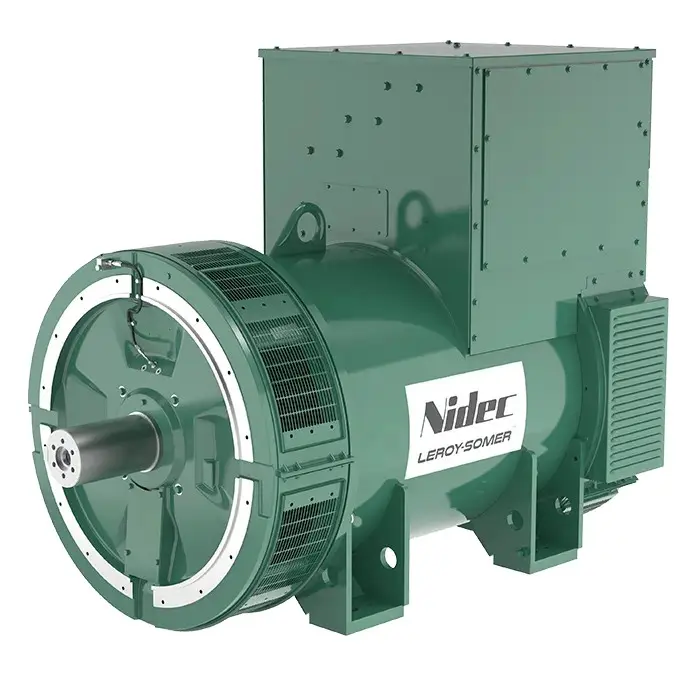
Leroy-Somer Alternator (part of Nidec): This acts as the reliable, dispatchable power source, often used for backup or to supplement the BESS.
- Backup power: In islanded mode, the alternator provides the necessary power when the BESS is depleted or when loads are higher than what the renewable sources and BESS can provide.
- Grid code compliance: Nidec Leroy-Somer can ensure its generators meet local grid code requirements, including specific studies on transient behavior for seamless integration.
- Combined control: DEIF and Leroy-Somer have a history of collaboration, including the development of combined control solutions, ensuring high compatibility and simplified commissioning.
A DEIF-controlled hybrid microgrid operates in several modes to maximize efficiency and reliability:
- Grid-connected mode: The system remains connected to the main utility grid. The DEIF controller prioritizes the use of renewable energy and the BESS to reduce electricity costs and minimize reliance on the grid.
- Islanded mode: If the main grid is lost, the DEIF controller automatically isolates the microgrid from the utility. The BESS, with its rapid response time, provides immediate power to maintain stability, while the controller signals the Leroy-Somer genset to start and take over the load.
- Black start capability: In a full blackout scenario, the BESS can provide the initial power to start the diesel genset and re-energize the microgrid without external power.
- Hybrid mode (Grid-forming): In this mode, the DEIF controller, often with the BESS, actively establishes and maintains the microgrid's voltage and frequency, acting as the primary grid-forming source.
For a successful implementation of this microgrid, several key engineering steps are necessary:
- Communication protocols: Verify that the Nidec BESS Power Conversion System (PCS) and Leroy-Somer's alternator controllers are compatible with DEIF's communication protocols, typically using Modbus RTU/TCP.
- Controls and logic: The control logic within the DEIF controller must be precisely programmed to define how the system transitions between modes, handles faults, and prioritizes power sources.
- System protection: Comprehensive protection coordination is vital, ensuring that circuit breakers and other safety devices react correctly to faults, especially when transitioning between grid-tied and islanded operation.
- Installation and commissioning: Experienced technicians are required to correctly wire the components, configure the DEIF software, and perform on-site testing to ensure stable and reliable operation. DEIF offers emulation features to assist with system architecture planning.
Vert Energy.
Join us and make your company a better place.